Category: Dailies

Reality Setting In

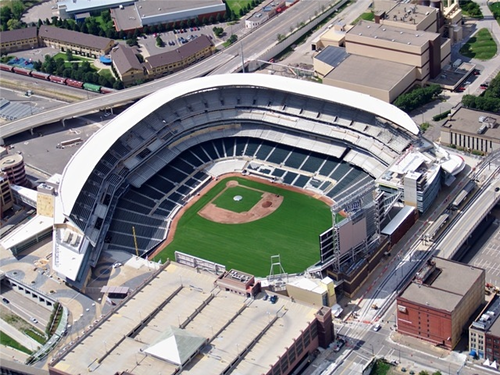
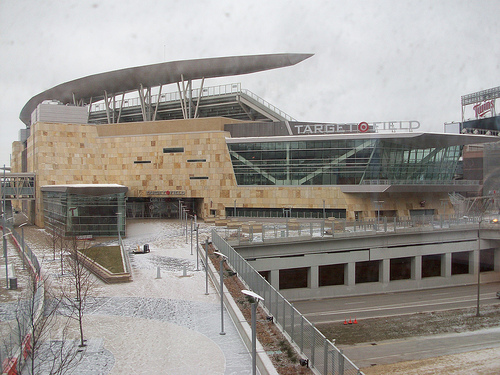
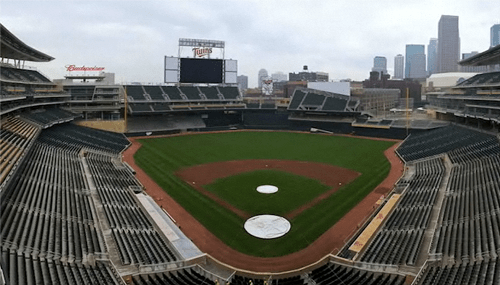
The first real game at Target Field is now just over 70 days away. As the days slowly pass, reality is beginning to set in that the Minnesota Twins will really have their own ballpark and be back outdoors next season. 

It seems like just yesterday that the team was breaking ground on the construction site and fans were looking at simple renderings of what the future park might look like. Those renderings are now a direct resemblance of Target Field.
The Aerial View
Aerial Drawing.png
Areial Real.png
The Plaza
Plaza Drawing.png
Plaza Real.jpg
The Homeplate View
Homeplate Drawing.png
Homeplate Real.png

Odds and Ends: TwinsFest Day One
61142844.jpg
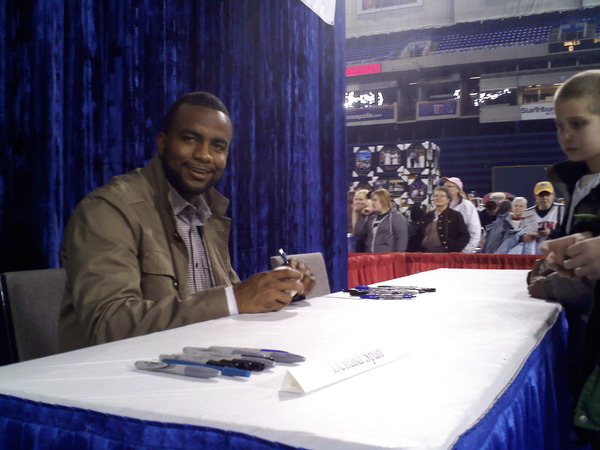
(*) The Official Twitter account of the Minnesota Twins was all over the Metrodome grounds taking pictures of Joe Mauer, Justin Morneau, the newest Twin, Jim Thome, the picture of Denard Span above, and much more. 
(*) There were many quotes from several players, including Joe Mauer’s thoughts on the Homerun Derby last season:

Mauer says home run derby was tiring “because Morneau kept me out late the night before.”

(*) Joe Christensen of the Minneapolis Star Tribune has a story on Joe Mauer’s contract situation, and the following excerpt shows just how much the catcher means to the city and the Minnesota Twins organization:

The line for Joe Mauer’s autograph started outside the Metrodome at 8 a.m. Friday. He was eight hours from signing, and the temperature was minus-4.

TwinsFest 2010 will resume on Saturday at 9 a.m. and will wrap up with a third day on Sunday. No Joe Mauer signing is expected this weekend, but the annual event will help get baseball back in the news nonetheless. 

The Thome Aftermath

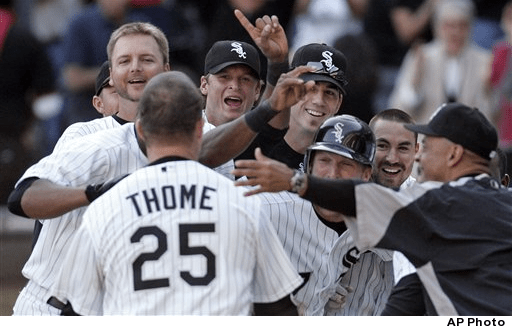
After being a Twin killer for most of his career, a run that included hitting 57 homeruns against Minnesota, Jim Thome is joining the organization. For just $1.5 million and up to $750,000 in incentives based on plate appearances, Thome will become a powerful bat off the bench and a spot starter at designated hitter. 

What exactly Thome will do is hard to tell, but it is know that the signing affects the team’s roster, the team’s bench plans for the 2010 season, and the current payroll.

40-Man Roster
The team’s 40-man roster is currently jam packed. There is nowhere to put Thome, and the Twins will have until this weekend when Thome completes his physical to make a roster decision. 
It’s currently difficult to tell who exactly the Twins will remove from the roster as several candidates would be in danger of being lost through waivers. Both Glen Perkins and Alexi Casilla are rumored to be available, but it’s also difficult to see something happening on that front before spring training. 
Bench Plans
The Twins will in all likelihood go with a 12-man pitching staff. Going in that direction would allow for four players on the bench, and with Jim Thome onboard, the plan might change just a bit.
Jose Morales, or any other catcher who may need to start the season after Morales’ has surgery this week, will take one spot. Two spots remain after that, and it sounds as if Jason Pridie might get one spot while the other could come down to a battle between Alexi Casilla and Matt Tolbert if no further moves are made. 
If the Twins sign a second or third baseman, either Nick Punto or Brendan Harris could shift to the bench, costing both Tolbert and Casilla roster spots. All in all, the bench battle won’t be fully solved until spring training gets underway. 
Payroll Situation
Thome’s contract was rather small, and it really adds just about $1 million to the payroll since he’ll be taking a player’s roster spot who would have made the minimum of around $500,000. Now that Thome is signed, the Twins are right at or slightly above the $90 million mark.
Assuming the Twins might have $5 million more to spend if the right move comes along, there could still be a move to re-sign third baseman Joe Crede or a second baseman such as Orlando Cabrera, Orlando Hudson, or Felipe Lopez. 

Thome Talk

Thome.pngAll around baseball, slugger Jim Thome is regarded as the ‘nice guy’. He’s well respected for his involvement in the community, his leadership in the clubhouse, and his general likability by opposing teams and players. 
For 16 seasons, Thome has been the Twins’ nemesis. First the five-time All-Star spent 12 seasons with the Cleveland Indians, and most recently he spent four seasons with the Chicago White Sox. Thome has hit 57, count them 57, homeruns against Minnesota, with the notable one helping Chicago capture a division title over Nick Blackburn and the Twins in 2008. 
After being the bully for 16 years in the American League Central, the Twins are now trying to add the powerful lefty to their own roster in hopes that he’ll turn the tide on Cleveland, Chicago, Detroit and Kansas City. 
Thome makes sense for the Twins, a team in need of a powerful hitter off the bench, and a team still searching for a fourth outfielder. 
No, Thome won’t be patrolling the outfield anytime soon, but he would indirectly affect the situation. With Thome on board, the Twins would add a powerful pinch hitter off the bench, and a more than capable designated hitter against right-handed pitching.
While Delmon Young, Denard Span and Michael Cuddyer are plugged into the outfield, the Twins currently have Jason Pridie as their fourth outfielder. Thome would allow the team to shift current designated hitter Jason Kubel to left field and Young to the bench when necessary.
Outside of Minnesota, the White Sox and Rays are still in on the 39-year old veteran. Chicago is leaving the choice up to manager Ozzie Guillen, and he’s expected to make his decision in mere hours. If his former team passes, Thome could choose his 2010 destination by the end of the week. 

To-Do List: Late January

The Minnesota Twins have made some improvements to the roster this off-season, but they have nonetheless been relatively quiet. Outside of acquiring shortstop J.J. Hardy, retaining starting pitcher Carl Pavano, bringing in reliever Clay Condry, and avoiding arbitration with eight eligible players, the Twins have kept to themselves.

Questions remain regarding the roster, and the team is now just four weeks away from reporting day in Fort Myers, Florida. Every question can be answered with a roster move in the form of a free agent signing or trade; those same questions can be answered in-house if the front office deems that to be the best route.
Now one week away from TwinsFest and one month away from day one of spring training, here is a look at the team’s current to-do list.
1) Sign Joe Mauer
Whether the Twins sign two more players or make no additional roster moves, their off-season will be judged based on what they’re able to do with Joe Mauer. The Twins will be assessed by the outcome of their negotiations, and they must lock up the hometown hero to keep fans not just happy, but calm as well.
2) 5th Starting Pitcher
Scott Baker, Kevin Slowey, Nick Blackburn and Carl Pavano seem to be locks for the 2010 Opening Day rotation. One final spot remains however, and the Twins must decide what their plan will be.
Lefties Brian Duensing, Glen Perkins and Francisco Liriano could compete for the job, or the team could sign veteran Jarrod Washburn, whom they offered a one-year deal weeks ago. The best route and money-wise way would be to let the in-house candidates fight for the job this spring.
3) Fourth Outfielder
If the season were to start today it seems as though Jason Pridie would be the team’s fourth outfielder. He isn’t the worst option since he brings both speed and the ability to play each outfield position.
Nonetheless, the Twins must decide if they’re comfortable with Pridie or if they feel they need to bring in a veteran who can provide pop off the bench. One popular name is Eric Byrnes, whom the Diamondbacks released earlier this week. 
4) Solution Needed: 2B and 3B
The organization’s third base options are now limited. They can re-sign Joe Crede to an incentive laden deal, or they can go in-house with a combination of Brendan Harris and Nick Punto. Whatever the case, they’ll soon be forced to pick a solution.
Second base is more complicated. Two premier upgrades remain on the market, and each would provide a solution to both the infield position and the two-hole in the lineup. The Twins have had internal discussions about both Orlando Hudson and Felipe Lopez, but are waiting for the price to drop. 

Arbitration Aftermath: Payroll Implications

It took only one day for the Minnesota Twins and their eight arbitration eligible players to agree to terms. After all players filed by the deadline last Friday, the sides exchanged offers on Tuesday and agreed to contracts for the 2010 season by the end of the day.

Carl Pavano signed for $7 million, J.J. Hardy for $5.1 million, Matt Guerrier for $3.1 million, Delmon Young for $2.6 million, Jesse Crain for $2 million, Francisco Liriano for $1.6 million, Pat Neshek for $625K, and Brendan Harris agreed to a two-year, $3.2 million contract.
On the day, the Minnesota Twins committed an additional $23,475,000 to their payroll for next season. In addition, they took another huge step toward a $90 million payroll for their first season at Target Field. 
January Payroll.pngCurrently at about $88.5 million according to rough estimates, the Minnesota Twins may have a small amount of money left to spend in the coming weeks. With reports that the Twins offered Jarrod Washburn a one-year, $5 million contract two weeks ago, there are indications that the organization could approach $95 million if the situation is right.
With second base, third base, and the fourth outfield spot uncertain, it is still very possible that the Twins could make another addition before the club reports to Fort Myers, Florida in four weeks. 

Bullpen Logjam

The Minnesota Twins have a bullpen logjam, and while it seems to be a problem waiting to be solved, it isn’t a bad issue to have. With pitchers returning from injuries this upcoming spring, pitchers being exiled into the bullpen, and even an addition, the bullpen is already full.

There are some locks: Joe Nathan, Matt Guerrier, Jon Rauch, Jose Mijares and Clay Condrey all seem to be locked into the bullpen. Jesse Crain isn’t far behind, but Pat Neshek needs a spot too, and the team also has starters Glen Perkins, Brian Duensing and Francisco Liriano who could potential be up for a spot. 
With the current roster, one of the three starters, Perkins, Duensing, or Liriano, will be in the rotation. Another is likely to become an extra left-handed option in the ‘pen. 
Most seasons, the Twins go with a 12-man pitching staff, and with six spots seemingly locked up, the Twins will need to solve the current logjam. There will be an extra starter to deal with, and Perkins has already been well-connected in trade talks. Meanwhile, the Twins will need to decide if Neshek is ready from day one or if they want him to wait out the cold Minnesota days and begin in sunny Florida.
If the trade rumors involving Perkins are accurate, and the lefty is eventually moved prior to the season, the situation could play itself out. Either Liriano or Duensing, whoever misses out on the fifth spot in the rotation, would enter the bullpen, and Neshek would takeover a spot after some extra innings down south or when needed due to injury. 
The Twins don’t have a problem, but more so a minor issue. They have plenty of pitchers to fill out the staff, now they just need to figure out which ones fit the best and figure out what to do with the extras. 

Two Upgrades Remain

With each passing day, the Minnesota Twins’ chances to upgrade both the infield and lineup have gone right with. Off the table are Pedro Feliz, Garrett Atkins, Chone Figgins, Troy Glaus, Mark DeRosa, Adrian Beltre and Kevin Kouzmanoff. The third base options have dried up, and if the team upgrades before spring training, it’ll need to be in the form of a second basemen.

At third base, there are no more options. Joe Crede would be much of the same; a half-season player with decent production when healthy, and Miguel Tejada has never played anywhere but short, and the Twins haven’t been connected with him all off-season.
At second base, there are two sensible options for the Twins. Due to currently high demands, both Orlando Hudson and Felipe Lopez remain on the market. There are many teams interested, and in the end it may come down to which team is willing to give the extra year or extra dollars. 
Between Denard Span and Joe Mauer, both Hudson and Lopez would fit well. While Hudson hit .283 in 149 games last season, Lopez hit .310 in 151 games, Hudson posted an on-base percentage of .357 while Lopez posted one of .383, and Hudson hit 9 homeruns and drove in 62 runners while Lopez hit 9 homeruns and drove in 57 runners. 
A recent report put Hudson’s demand at $9 million per season. No team will pay that number, and so it’ll be a waiting game. The Washington Nationals are interested, as are other teams, but if the Twins want to make one final mark and truly upgrade the infield, they have just two more obvious chances remaining. 

So Long, Mike Redmond

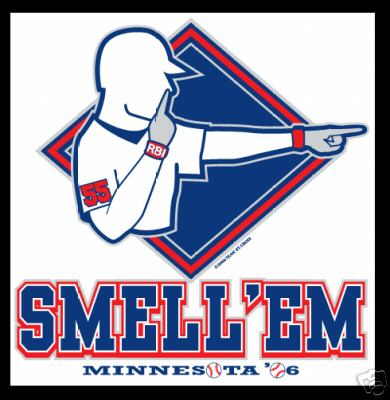
SmellEm.jpg
For five seasons Mike Redmond called Minnesota home, but when the 2010 season kicks off in April, Redmond will be in Cleveland. After being a leader in the Twins’ clubhouse since his arrival in 2005, Redmond was forced out by an overloaded position.
In five seasons with the Twins, Redmond hit .297 with 2 homeruns and 101 RBI. More important than his numbers was his leadership and durability. Redmond was a leader in the clubhouse each season, and it showed immensely in 2006 when he introduced “Smell ‘Em” en route to a playoff run. 
One season later in 2007, Redmond showed his toughness when he was hit in the head by Jim Thome’s bat. Redmond received stitches, but the next day he was back behind the plate catching.
The time went by fast, and while Redmond wasn’t an All-Star catcher, he was an integral part to multiple playoff teams with his leadership. When Redmond does call it quits, there have been indications that the organization would welcome him back as a coach.

Interview: Joe Posnanski

Joe Posnanski is a senior writer for Sports Illustrated. He’s written three books, wrote for The Kansas City Star from 1996 to 2009, has twice been voted as the Sports Columnist of the Year by the Associated Press, and has been nominated for a grand total of 21 sports writing awards. 

Posnanski covers many sports, but he’s well known for his baseball writing, and in recent years, his name has become even more widespread to Twins’ fans. He’s been very passionate about two causes that relate to Minnesota Twins fans in particular: Joe Mauer and the MVP, and Bert Blyleven and the Hall of Fame. 
Joe took some time out of his busy schedule to talk Mauer, Blyleven, writing, the Metrodome and more.

Voice From Twins Territory: Growing up, what was your favorite baseball team, and who were some of your favorite players? 

Joe Posnanski: Well, I was a hardcore Cleveland Indians fans in the 1970s and my favorite player, without question, was Duane Kuiper, a gutsy second baseman who could not run fast or hit with power or hit much at all. But I loved him just the same. Loved pretty much all those Indians – Buddy Bell, Andre Thornton, Rico Carty (who would keep his wallet in his baseball pants and would not slide), Len Barker, Frank Duffy, Rick Manning, … well, just say all those Indians players. 

VFTT: What was your childhood dream, did you always know that you wanted to be a sports writer? What influenced this decision? 

JP: My childhood dream was to play second base for the Cleveland Indians. And if that did not work out, I was willing to be an overachieving wide receiver for the Cleveland Browns. And if that didn’t work out, I had an image of myself sprouting up so I could be a point guard for the Cleveland Cavaliers. Despite all my backup plans, none of those things quite worked out. I did not think about becoming a sportswriter until college … my decision was basically influenced by flunking out of accounting. 

VFTT: What has it been like in the past year to have the opportunity to join Sports Illustrated as a senior writer covering Major League Baseball? 

JP: Well, the great thing about my job at Sports Illustrated is that I get to cover everything. Baseball is my calling card, I think, and I love it. I also love that when baseball season ends I’m writing football and when football season ends I’m writing basketball and golf … I love the variety of my job. 

VFTT: What are your thoughts on sabermetrics? How do you feel they change the way people look at players and baseball in general? 

JP: Well, sabermetrics, as I understand it, is the analysis of baseball through objective measures – so my general thoughts: I love that. I don’t agree with everything I see, and I don’t understand everything I see, but I like the idea of trying to find truth in baseball rather than just throwing out an opinion without some effort behind it. 

VFTT: Regarding sabermetrics, where do you cross the line? When is the time to ‘ignore’ them in certain cases when looking at players? 

JP: I don’t think you EVER cross the line in an effort to find truth in baseball or any sport. I think people can use statistics in a misleading way to prove a pre-determined point, and so I suppose that’s crossing the line. But that’s not really sabermetrics. And I don’t buy for one minute that the enjoyment of the game is in any way hindered by numbers. I get a huge thrill out of Albert Pujols’ wide stance, Carlos Beltran chasing down a fly ball, Tim Lincecum painting the outside corner with a 98-mph fastball, Evan Longoria making a diving play to his left, and a guy hustling up the line to beat out a double play. I love the big and small details of baseball. But that doesn’t prevent me from wanting to challenge what I see and know more than my observations can tell me. 

VFTT: You lobbied hard for Joe Mauer’s Most Valuable Player candidacy this season, what made you feel so strongly about him winning the award? 

JP: He was clearly the best player in the American League. I just thought it was so obvious that I had to write about it again and again – imagine, a catcher leading the league in batting, on-base percentage and slugging percentage. It had never happened before, and it’s one of the great accomplishments in baseball history. I hoped it would be rewarded, and I’m glad that it was rewarded. 

VFTT: You have stated that you felt Mauer should have won the Most Valuable Player award in both 2006 and 2008, did this make you push for him harder in 2009? 

JP: No, I don’t think so. I’m a big Joe Mauer fan. I love watching him play. I think he was underrated in 2006 and 2008 – I voted him MVP in 2008 and would have in 2006. But I think 2009 was a year apart even from those two seasons. 

VFTT: What do you feel Joe Mauer’s future holds? Do you see any way that Mauer is not a Twin after the 2010 season? 

JP: Well, I see a way, of course. If he pushed it, he could probably get $30 or $35 million a year. But I HOPE he stays a Twin because he means so much to the town and the Midwest in general. At the end of the day, I hope I would never tell anyone how to live their life. I would love to see Minnesota pay Mauer fair market value and I would love to see him stay there for his whole career. But that’s up to Mauer and the Twins. 

VFTT: You have a Hall o
f Fame vote and it’s been said that you are ‘obsessed’ with the process of filling out your ballot, is this true? 

JP: I would say that’s probably true – but I don’t think it makes me different from many Hall of Fame voters. Most of the voters I know take the process very seriously. 

VFTT: You watched Bert Blyleven growing up, what were your impressions of him at that period in time? 

JP: I thought he had the best curveball I had ever seen. It was a Bugs Bunny curveball that would start at your eyes and end up at your toes. I know that generally he was not viewed as a big star, but I thought he was just awesome when he pitched for some lousy Cleveland teams in the 1980s. 

VFTT: You voted for Blyleven the first year you had the opportunity to vote, how strongly do you feel about him being in the Hall of Fame? 

JP: Well, as strongly as I can feel, I guess. I vote for him. I push for him. I probably won’t handcuff myself to Cooperstown doors … I leave that for Rich Lederer, who feels even more strongly than I do. 

VFTT: What are your key arguments of why Blyleven should be in the Hall of Fame? 

JP: Well, there are countless arguments both ways. I guess at the end of the day, my feeling is that a pitcher who is fifth all-time in strikeouts, ninth all-time in shutouts and 27th all-time in victories belongs in the Hall of Fame. 

VFTT: What do you think other voters who don’t vote for Blyleven see? Why has it taken so long for people to begin to vote for him? 

JP: Well, there are arguments against Blyleven. He didn’t win 300 games, which is probably a silly line to draw but it is a pretty clear-cut line – if Blyleven had won 13 more games he would have gone to the Hall in one of his first three ballots, I bet. He only won 20 games once – another silly line in my mind but it’s there. His winning percentage is low for a great pitcher, and fairly or unfairly he really did not have a reputation as a great pitcher. It just takes a while for all that to flush through the system, I think. 

VFTT: After getting 74.2 percent of the vote, is it a guarantee that Blyleven will get in next year? 

JP: There are no guarantees in life, but I’d say he’s 99% sure. 

VFTT: You’ve twice been named the best sports columnist in America and have been nominated for over 20 other awards, what has that all been like? 

JP: My mother always says that with all my awards and 4 bucks I can get a cup of coffee at Starbucks. It is really nice that people have thought enough of me to give me some awards and I’m very appreciative. But I also know that’s not what this is all about. 

VFTT: What is your favorite part of covering major league baseball on a daily basis? 

JP: Well, I don’t quite get out there on a daily basis, but I love the whole thing – love watching batting practice, love watching infield (when they do it), love everything about the daily process of baseball. 

VFTT: What is the best event that you have witnessed in person in your time covering baseball and sports in general? 

JP: I’ve been to so many great things. The Jeter home run shortly after 9/11 was incredible. But I’ve really seen a lot of great stuff. 

VFTT: The Minnesota Twins will be outdoors next season, have you seen the new stadium, and what are your impressions? 

JP: I have seen the stadium, and it looks absolutely beautiful. I know people talk about the weather a lot, but I know that June and July and August in Minnesota are about as beautiful as anyplace in America, and it always made me sad to go inside and play ball on those days.  

VFTT: Do you think weather will be a factor in Minnesota any more than it is in Detroit, Cleveland and other colder cities? 

JP: Probably not. I was lectured by my friend Jeff Shelman on that very subject when I brought it up. Early April could be brutal, late October could be brutal, but generally it is not much different from my own Cleveland hometown. 

VFTT: As the team leaves the Metrodome, what are your impressions of the facility and your greatest memories of the park? 

JP: Well, it’s weird … I always liked the Metrodome in an odd way. It was a great place to cover a baseball game – ev
erything was easy there. It may not have been a great place to watch baseball, but for a writer who just wants access to and good sight lines and all that, it was pretty great. And I liked the possibility that a player would lose the ball in the roof. 

My greatest memory there, without question, was Buck O’Neil Day. I was traveling with Buck then to write my book “The Soul of Baseball” and they had Buck O’Neil Day – gave out baseball cards with him on it, brought in celebrities like Tony Oliva – and it was just beautiful. Minneapolis is one of my favorite places in the world, and that’s a big reason why.